The Evolution of Abstract Fluid Art
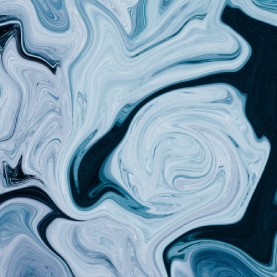
Modern fluid painting techniques can be seen as an extension of earlier abstract art movements. In the early part of the 20th Century many abstract artists turned away from the traditional brush stroke and instead used drips, pours, and splashes to create spontaneous composition.
The development of acrylic paint facilitated further exploration of this type of painting. Acrylic paints dry quickly, can be easily mixed with additives to adjust viscosity and can be formulated to varying degrees of thickness. These properties make acrylic ideal for pour-based painting techniques, such as swirling, which require paint to flow smoothly and evenly across a surface.
In addition to advancements in paint technology, artists were able to develop new pouring mediums that allowed acrylic paint to maintain pigment stability while spreading evenly across a surface. Ultimately, this experimentation led to the modern approach to acrylic pouring and swirl art.
Digital platforms have also played a significant role in the growth of fluid painting popularity. Artists began sharing videos and live demonstrations of fluid painting techniques, providing others with the opportunity to observe the process and attempt their own versions of the technique.
Understanding Acrylic Pouring
Acrylic pouring is perhaps one of the most commonly used techniques by artists who specialize in creating abstract swirl art. By combining acrylic paint with a pouring medium (the liquid additive) and applying the resulting mixture directly to a surface (such as canvas, wood panels, or art boards), artists have created the foundation upon which many modern abstract paintings are based.
Importance of Consistency of Paint Mixture
The consistency of the paint mixture is also very important to achieve the desired effects. If the mixture is too thick, the paint will not flow properly, and if the mixture is too thin, the colors will likely bleed into one another and lose their contrasting qualities.
- Layering Colors: Many times artists layer multiple colors in one cup at once. Once the paint mixture is poured onto the canvas, the surface can be tilted to cause the paint to flow in various directions. The resulting movement of the paint creates the swirling patterns that are characteristic of fluid art.
- Every pour produces a unique composition: Since the paint reacts differently each time the mixture is poured, the composition of every pour will be different. Therefore, the beauty of working with fluid art lies in the ability to produce a completely new and unique piece of art with every attempt.
Techniques Using Unconventional Tools
Most contemporary fluid artists continue to experiment with non-traditional tools which alter the way paint moves, combines or separates when placed on a canvas.
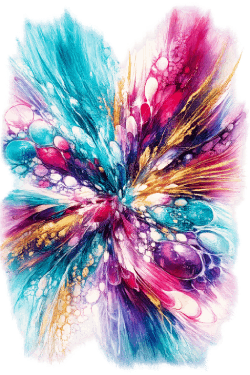
Small heat tools (heat guns) and/or small torches are occasionally employed by some artists to remove air pockets in the paint. Additionally, when working with specific fluid mixtures, the use of a gentle heat will encourage cells to form.
Airflow tools can move paint around a surface without direct contact. Artists have been known to use blow dryers, compressed air, etc., to force paint out from the center of their work to produce soft, directional patterns.
Examples of Experimental Tools
Fluid paint can be manipulated by many objects resulting in unique shape designs.
- Silicone spatulas are used to move the fluid paint and leave smooth, curved patterns behind.
- Balloons can be pressed into wet fluid paint and lift pigment off the surface producing circular forms.
- Plastic combs are used to repeat lines that show through to colors under the surface.
- Straws/air blowers are used to control the amount of airflow directing paint streams to create various paint effects.
The above tools are examples of the experimental nature of fluid painting; using common objects creates new ways of designing the final product.
Resin Art and Mixed Media
Resin painting has been linked to fluid painting techniques because resin is a liquid polymer that dries to a solid state and provides a glossy finish. Pigments added to resin create layers of colorful material that appear deep and shiny.
Some artists apply resin as a protective coat to an acrylic pour. The clear coat protects the colors in the paint and provides a glossy, polished look to the piece.
Other artists use resin as a painting medium. Because resin takes longer to cure than acrylic paint, artists are able to manipulate and arrange the colors in the pattern for longer periods of time before the resin dries.
Artists may add other materials such as metal powder, ink or textures to the resin to add depth, texture and interest to the finished product. This combination of resin with other materials allows for a greater variety of textures and colors in the finished piece.
Textural Layering and Color Relationships
Texture and layering are two elements which add visual "depth" to abstract swirling paintings. Many artists will apply multiple coats of paint or resin to their surface by applying one coat at a time; allowing the first coat to completely dry before applying the second coat.
Some artists will use modeling paste or gel medium to create texture on their painting surface prior to pouring paint onto the surface. When paint is poured over the surface created by the artist, the paint will collect in the lower areas of the texture and highlight the higher areas of the texture.
Color choice also greatly contributes to the visual appeal of abstract swirling paintings. The use of strong contrasts between colors creates vibrant and energetic patterns. Conversely, the use of similar color hues creates soft, subtle transitions.
The pigment density of paint affects how the paint will react to gravity during the pouring process. Thicker, heavier pigments may sink below thinner, lighter pigments creating ringed or cellular formations within the layers of paint.
Sustainability and Safe Studio Practices
Due to the growing popularity of fluid art, many artists are beginning to pay closer attention to safety and environmentally responsible practices when working with acrylic paint and resin products. Both acrylic paint and resin products are synthetic materials, and by practicing good safety habits, you can minimize your environmental footprint.
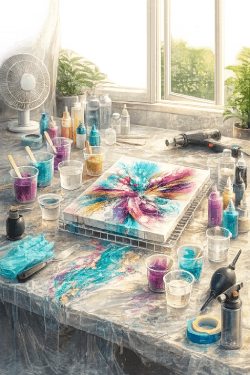
In addition to good safety habits, studios typically do not wash liquid paint or resin down the drain immediately after a project has been completed. Instead, they let the paint or resin harden before disposing of it.
With the increasing interest in fluid art, many manufacturers are now producing water-based pouring mediums, as well as, low-emission resin products.
Safe Studio Habits
Maintaining a safe and clean workspace allows artists to create with confidence, while minimizing the risks associated with working with fluid materials.
- Adequate ventilation is essential to help dissipate fumes that may be released during the curing process of resin.
- Protective gloves should always be worn to protect against skin contact with uncured materials.
- Covered work surfaces are necessary to protect floors and furniture from spills caused by the fluid materials used for creating abstract swirling paintings.
- Measuring tools will help to ensure that the correct ratio of resin to hardener is maintained, which is critical to the success of the artwork.
By incorporating these habits into your studio routine, you can continue to experiment with various techniques for creating fluid art while protecting yourself and your environment.
The Ongoing Evolution of Fluid Abstract Art
Abstract swirl art demonstrates how modern artists use movement, chemistry, and experimentation to create dynamic visual compositions. Through techniques like acrylic pouring, unconventional tools, and resin layering, fluid painting continues to expand creative possibilities. As artists refine methods and materials, this expressive form remains an evolving and influential part of contemporary abstract art.